
Voice cloning · Escrow callbacks
ElevenLabs can clone a voice in minutes. What does that mean for escrow?
A short recording can now make a familiar voice. That changes what an escrow callback can prove—and makes the source of the phone number more important.
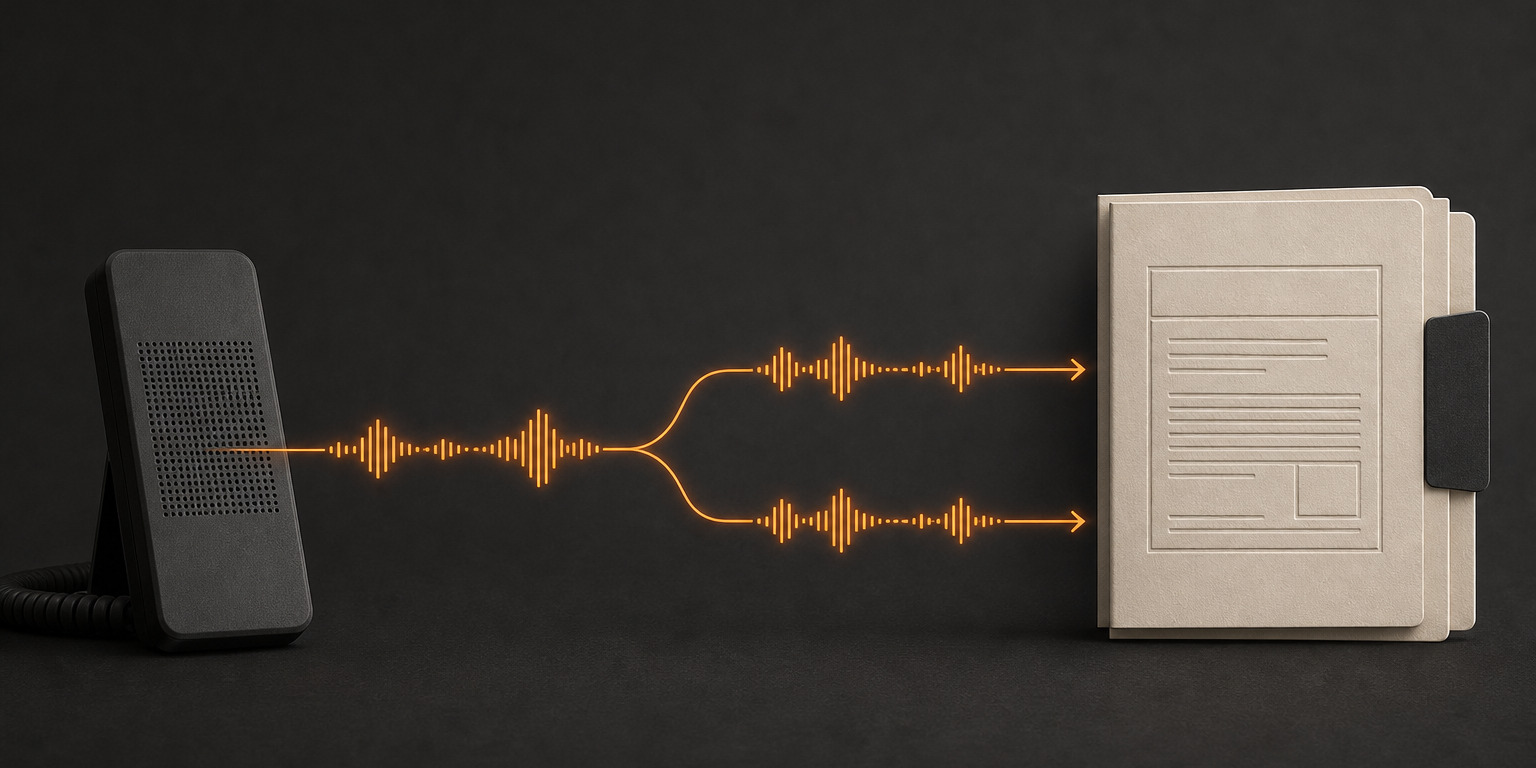
Short answer: A familiar voice cannot prove who is calling. The first question is not “Does this sound like them?” It is “Where did this number come from?”
ElevenLabs shows how small the technical step has become. Its Instant Voice Clone tool recommends one to two minutes of clear audio.
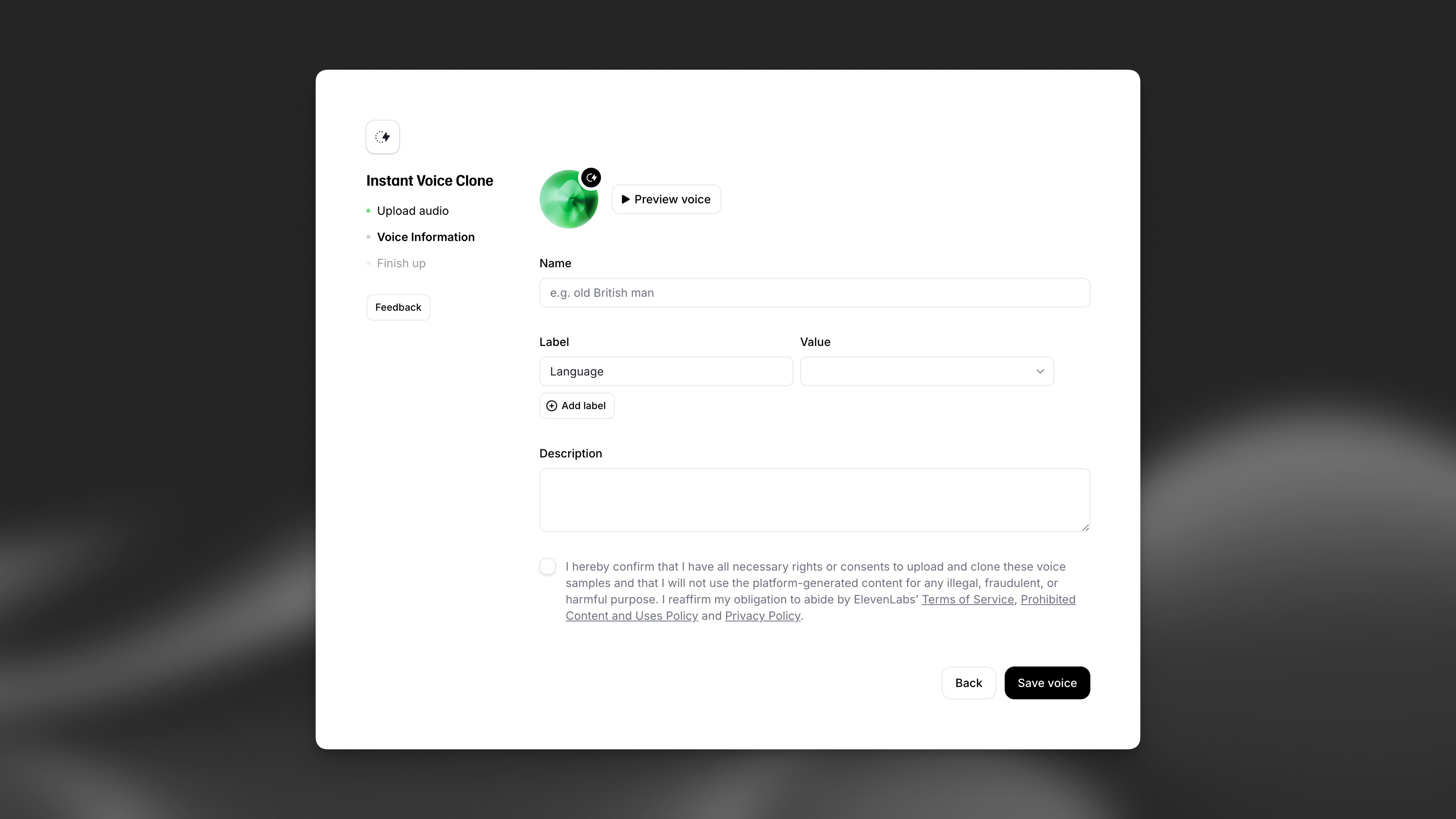
Upload the audio. Name the voice. Confirm that you have the right or consent to use it. Save it. Then type the words you want the voice to say.
That does not mean every odd call is fake. It does not mean ElevenLabs supports fraud. The product asks users to confirm that they have the right or consent to clone the voice.
The voice can sound right. The number can still be wrong.
How easy is it to clone a voice with ElevenLabs?
The normal product flow is short:
ElevenLabs says clear audio matters more than file type. It recommends one to two minutes with one speaker and little background noise. Its technical guide says less than two minutes can make a usable clone.
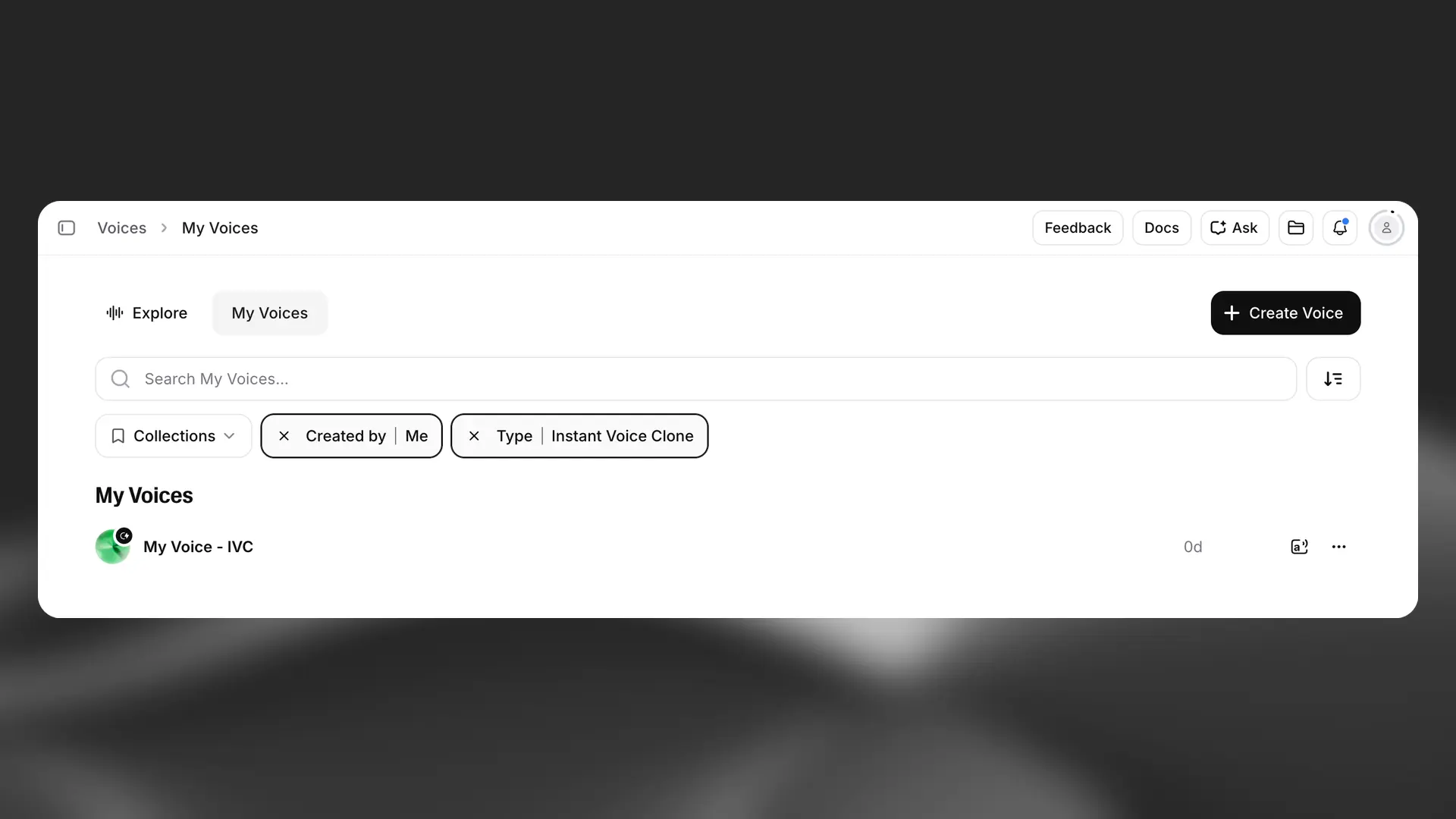
This is Instant Voice Cloning. ElevenLabs also sells Professional Voice Cloning, which needs much more audio and a training step.
The instant tool matters here because it shows how little work is needed to make a voice sound familiar.
The copy does not have to be perfect to change a call. It may only need to sound real long enough to add trust or pressure.
What does a familiar voice prove?
Not much by itself.
A familiar voice can support a story. It cannot prove who controls the phone, who owns the bank account, or whether the payment change is real.
Consent-safe demo · no voice was cloned
The voice can sound right. The number can still be wrong.
Assume the caller sounds exactly right. Now choose where the office got the callback number.
The Federal Trade Commission gives simple advice: do not trust the voice alone. Call the person back at a number you already know.
That advice matters in escrow because a callback can fail before the call even starts. If the phone number came from the same email that changed the wire instructions, the office may be calling the person who sent the false request.
The sound of the voice does not fix a bad source.
Can an escrow office trust a familiar voice on a callback?
No—not by voice alone.
A callback is one part of a review. Its value depends on how the number was found, who answered, what the office asked, what the answer showed, and what still did not match.
For a changed payment instruction, a useful record can show:
- What changed. Keep the old instruction and the new one.
- Where the phone number came from. Say whether it was already in the file, found through an outside source, or printed in the new request.
- Who answered. Record the name, role, date, and time.
- What the call showed. Write the facts the person gave and what the office checked.
- What stayed open. Do not turn doubt into a pass.
- Who reviewed the file and what the office did.
The point is not to prove that a caller used AI. An escrow officer may never know.
The point is to avoid giving a familiar voice more weight than it can carry.
Can an AI voice detector solve the problem?
Not by itself.
The FTC has looked at tools that try to stop cloning, spot it during a call, or test audio after the call. Its conclusion is careful: there is no single solution.
Watermarks may help, but they can be changed or removed. Detectors can miss a clone. They can also flag a real voice by mistake. A false “real” result can be dangerous when money is about to move.
Treat the voice as one piece of evidence. Check the request through a source the request did not control.
This does not make every call useless. It makes the source of the call, the facts checked, and the written record more important.
Does ElevenLabs have safeguards?
Yes. The Instant Voice Clone screen asks users to confirm that they have the needed rights or consent. ElevenLabs also says audio made by its models can be traced to the user who created it.
Those steps matter. They do not turn a familiar voice into identity proof.
They also do not cover every voice tool or every audio clip. An escrow office cannot know which tool, if any, was used before a call reached the desk.
So the office does not need to solve voice cloning. It needs to review the payment instruction in front of it.
The office decides. Veto records the review.
Sources
- Instant Voice Cloning guide — ElevenLabs
- How voice cloning works — ElevenLabs
- Approaches to AI voice cloning — Federal Trade Commission
- Scammers use AI voice clones — Federal Trade Commission
- Business email compromise guidance — Federal Bureau of Investigation
A note on scope
This article explains public sources as of July 29, 2026. It is not legal advice. The screenshots show ElevenLabs' public product guide on that date. No voice was cloned for this article.
Veto records what the office checked, what stayed open, who reviewed, and what the office did. It does not verify a caller, confirm account ownership, authorize a wire, clear fraud, or decide what the office should do.
Help shape the Review Record.
Ten DFPI-regulated independent escrow offices get 12 months free as Veto design partners. Use it on real reviews and tell us what the file needs.